
Science Meets Soccer: Park Hill Elementary Turns World Cup Excitement into Hands‑On STEM


Riding a wave of World Cup excitement, Park Hill Elementary STEM teacher Tammy Mathis transformed soccer fever into meaningful hands-on learning that challenged 2nd and 4th graders to investigate, design and discover.
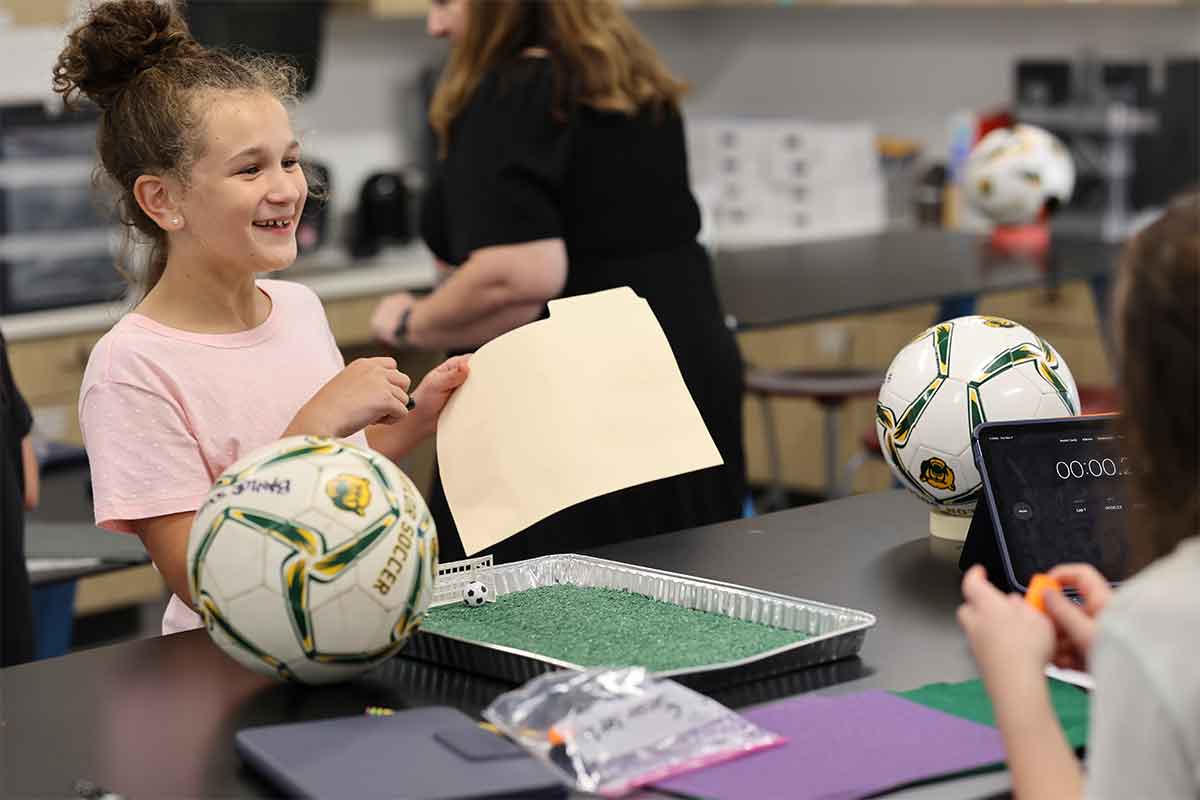
“The appeal is as much about relevance as it is about fun,” Mathis said. “By anchoring lessons in a familiar, high-energy context, students see that science and engineering aren’t just abstract ideas—they’re tools for understanding the world, from the physics of a corner kick to the design of a stadium surface.”
In Mathis’s 4th-grade classrooms, students swapped cleats for clipboards as they investigated how different playing surfaces and wind affect a soccer ball’s movement. Working like scientists, they rolled balls across turf, felt, sandpaper, and even bubble wrap, then introduced airflow to simulate wind. Along the way, students measured and compared friction, speed, force, and momentum to determine which conditions produced the most predictable and efficient ball control.
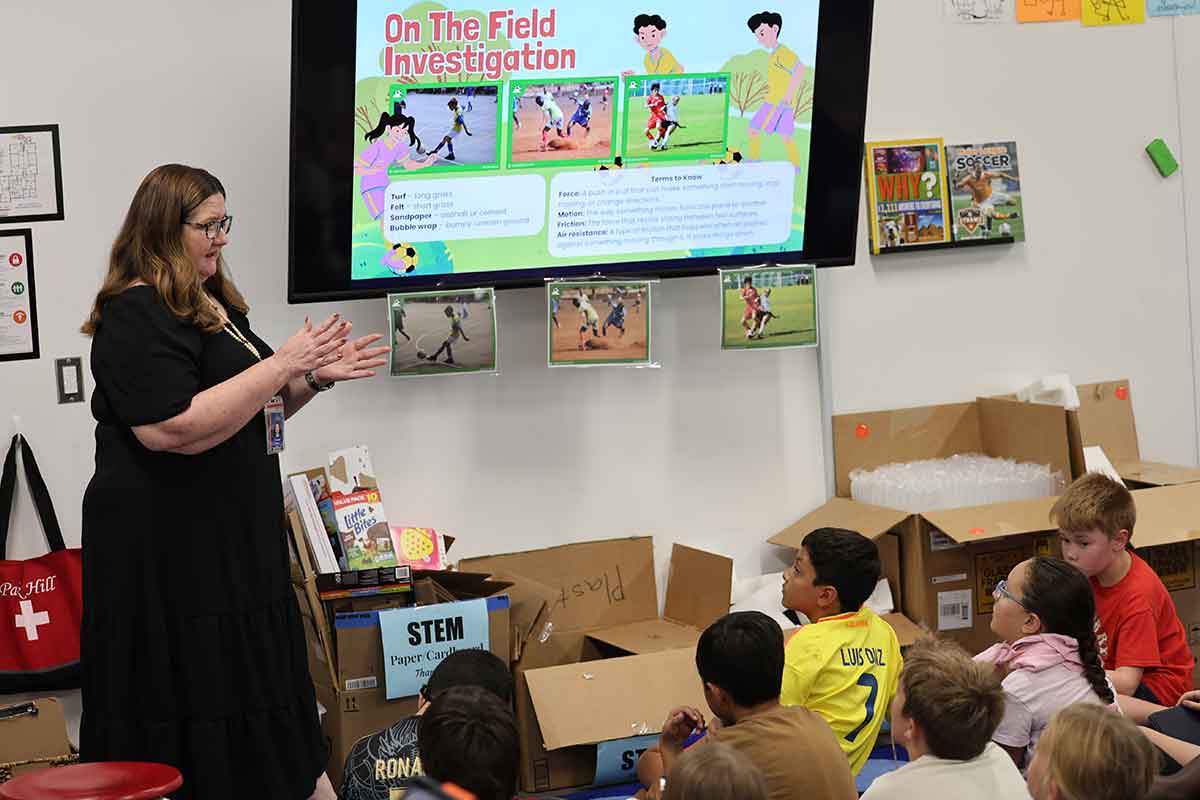
The inquiry-based lab emphasized experimental design from start to finish. Small groups formed testable questions, gathered data, and discussed sources of error—skills that connect directly to real-world physics and engineering.
“Student scientists explored friction, speed, and force to examine different soccer field surfaces,” Mathis said. “By tracking the ball’s momentum, they were able to determine optimum surface conditions.”
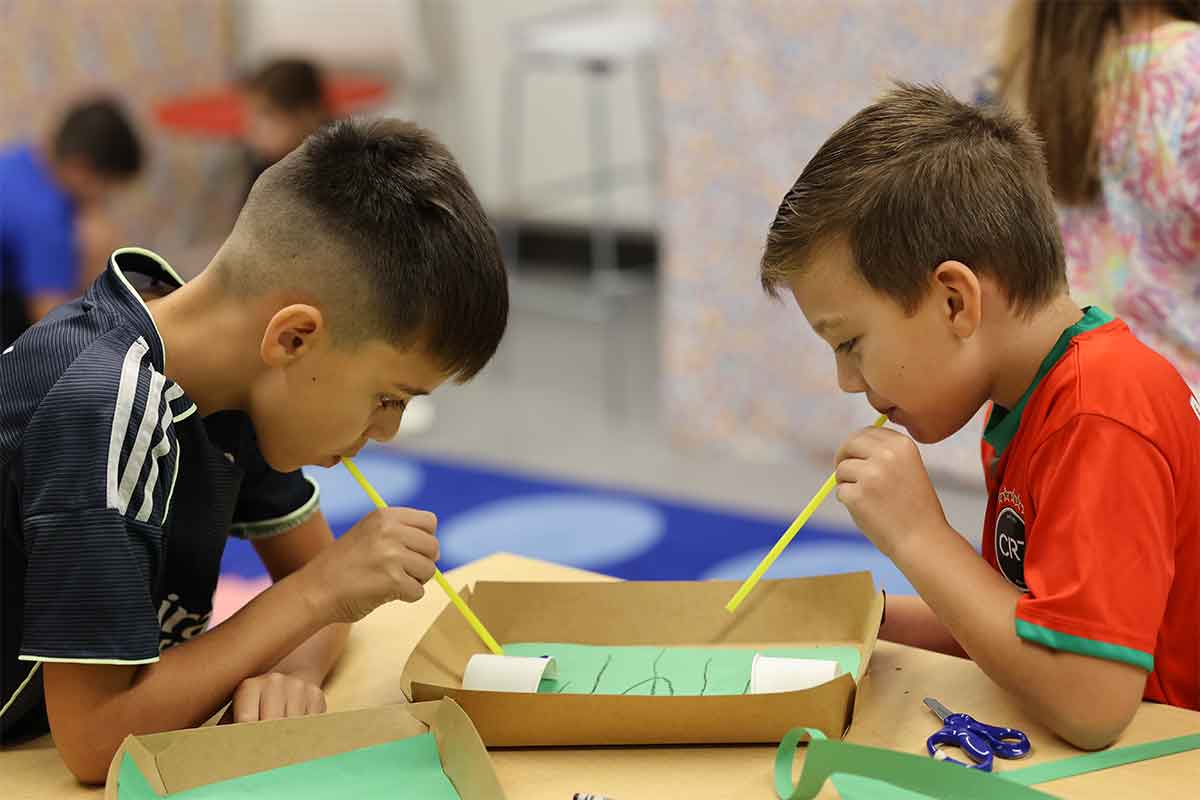
While older students tested variables, Park Hill’s 2nd graders became engineers. Given a simple set of materials—cardboard, paper, straws, and pompoms—students designed and built playable miniature soccer fields.
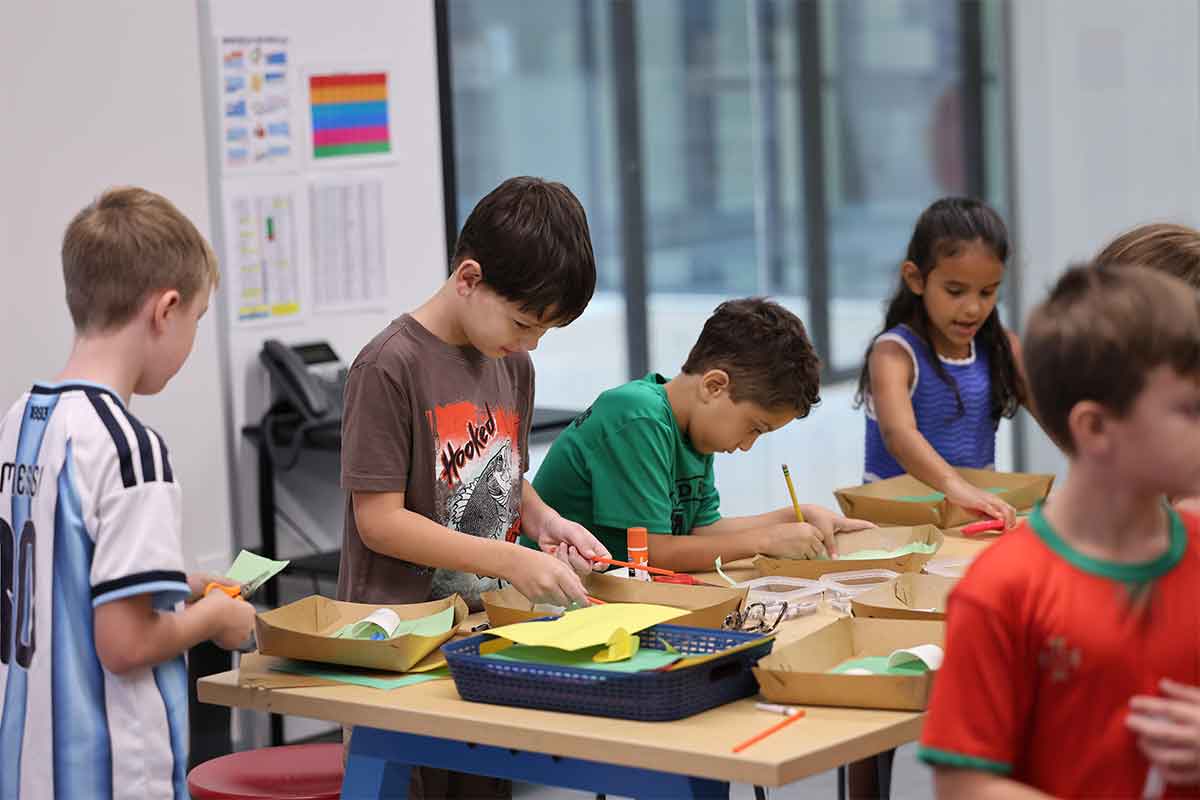
“From design to kickoff, they combined teamwork, problem-solving, and imagination,” Mathis said. “Teams sketched concepts, refined their designs, and worked through challenges such as stability, ball control, and goal construction.”
Across both grade levels, the unit paired high expectations with the support and freedom to learn by doing. Fourth graders practiced data collection and analysis while exploring forces and motion; second graders experienced the engineering design cycle firsthand and learned how simple materials can be used to prototype solutions.
The World Cup may come and go, but at Park Hill Elementary the impact of this unit will last. Students left with stronger inquiry skills, greater confidence in teamwork, and a deeper appreciation for how science and engineering shape the games they love.


